
How GUREN slip rings are applied and installed in real rotary systems — from wind pitch control to robot joints and radar pedestals. Each note combines field installation practice from our installation guide with the typical requirements of the application.

Pitch control systems need uninterrupted power and signal transfer across a continuously rotating shaft. GUREN through bore slip rings mount directly on the pitch shaft: the rotor is fixed to the shaft with screws, while the stator is held by an anti-rotation plate that retains free clearance to absorb installation eccentricity. Precious-metal contacts keep signal noise low, and sealed housings protect the assembly from nacelle moisture and temperature swings.
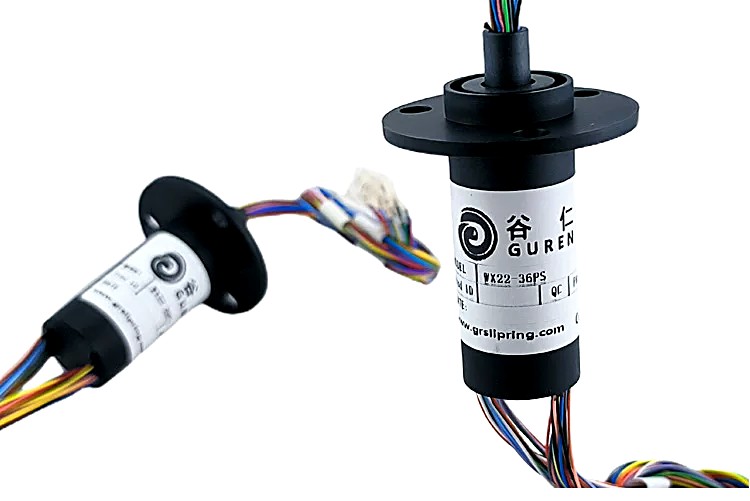
Robot rotary modules demand a compact slip ring with low running torque. GUREN capsule slip rings are fixed at the stator flange, with only the rotor-end wiring secured — the small torque of the capsule series keeps joint backlash minimal. Power and Ethernet channels run in one unit, so joint feedback and motor power share a single rotating interface.

Antenna pedestals rotate continuously while carrying high-speed data, video and power. A flange-mounted slip ring bolts directly to the turntable, and the anti-rotation plate is fixed with screws or pins without over-tightening, preserving the clearance that prevents eccentric loading. GUREN units combine power, signal and Ethernet channels in one flange interface for outdoor pedestals.
Most field failures trace back to installation rather than the product itself. Our installation guide calls for fixing the rotor to the shaft first, then mounting the anti-rotation plate with a deliberate free clearance — over-tightening forces the rotor against the housing and accelerates brush wear. Keeping the stator floating within its clearance eliminates eccentricity error and extends service life.